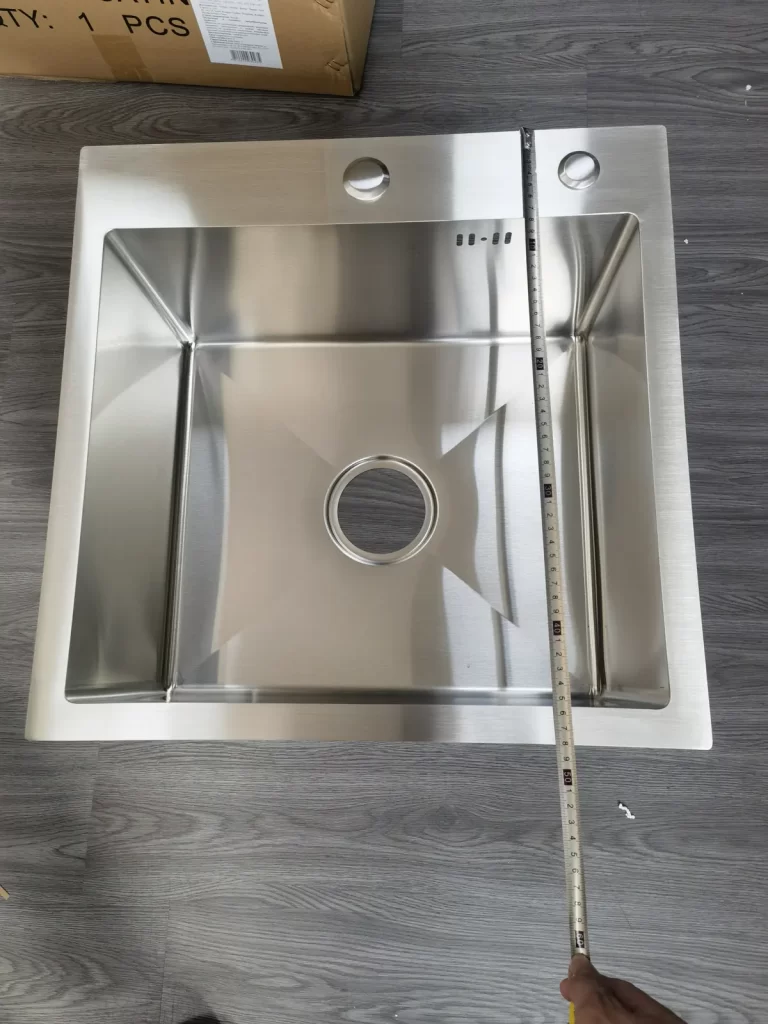


在迷人的厨房设计世界中,了解水槽厚度测量的复杂性至关重要。今天,我们就来深入探讨一下压制水槽和手工水槽在这一过程中的不同之处。
厨房水槽 艺术手工和不锈钢模型的厚度
压制水槽:注重面板厚度 ? 压制水槽是通过拉伸金属的工艺制作而成,因此需要特别注意面板厚度。在制造过程中,水槽的材料会变薄,因此面板厚度是衡量质量和耐用性的关键。这一重点确保了水槽在拉伸过程中仍能保持结构的完整性。手工水槽:全面的方法 ?️ 相比之下,手工水槽需要更全面的测量方法。由于这些水槽都是手工焊接而成,其厚度始终保持一致。因此,同时测量面板和水槽的厚度至关重要。这种双重测量可确保整个水槽,从坚固的面板到结实的底盆,都符合最高的质量和耐用性标准。
厨房水槽精度:测量手工制作和钢材厚度
Accurate Measurement Techniques Prepare the Sink: Ensure the sink is clean and accessible, whether it’s a pressed or handmade model. Use a Digital Caliper: Precision is paramount. A digital caliper will provide the most accurate measurements for both types of sinks. Measure the Panel and Basin (Handmade Sinks): Carefully measure the thickness of both the panel and basin. Consistency in thickness is a hallmark of quality in handmade sinks. Measure the Panel (Pressed Sinks): Focus on the panel thickness since it’s the most indicative of the sink’s durability post-manufacturing. Record and Compare Measurements: Keep detailed records of your measurements. This data is invaluable for ensuring quality control and aiding in future design choices. Conclusion Understanding the nuances in measuring the thickness of different 厨房水槽类型 is key in the realm of kitchen design and renovation. For pressed sinks, the panel thickness holds the spotlight, whereas, for handmade sinks, both panel and basin thicknesses are equally important. This knowledge not only aids in selecting the right sink but also in appreciating the craftsmanship that goes into each type. Remember, precision in measurement is not just about getting the numbers right; it’s about understanding the story and the craftsmanship behind every kitchen sink. ?