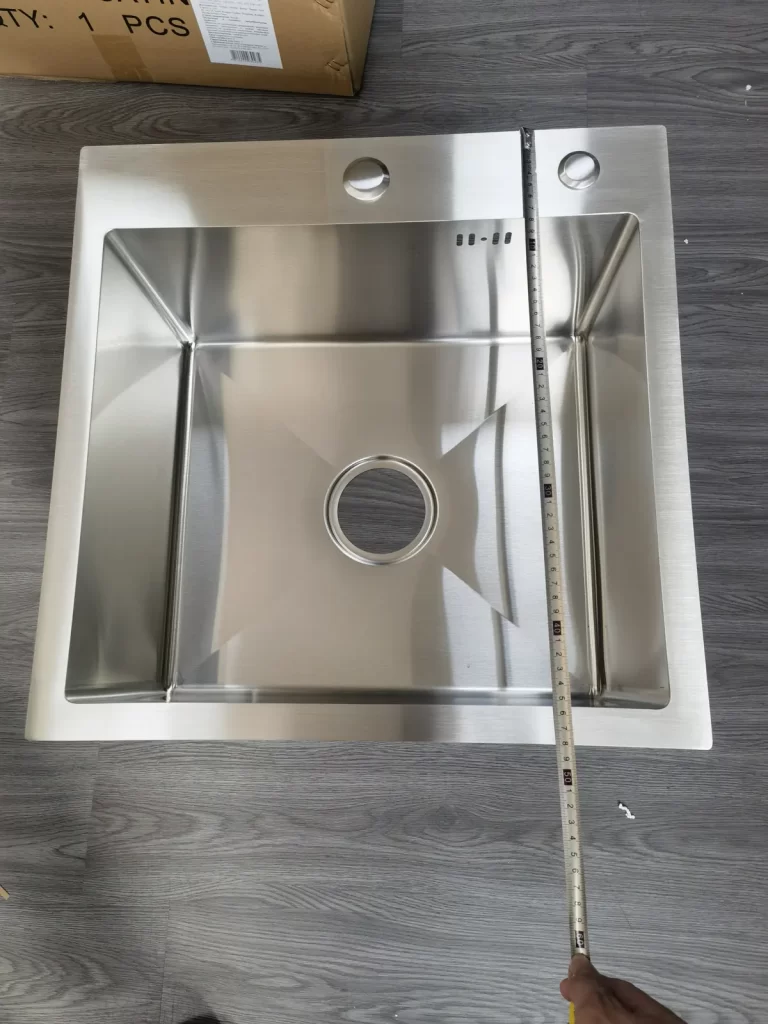


Choosing 201 vs 304 is a market-positioning, cost-control and complaint-risk decision — not just a material-grade question. Match 201 to price-sensitive or regional channels and 304 to markets with stricter corrosion or food-safety expectations, then confirm the grade on the mill test certificate before order. This guide covers what importers should compare.
Buyers make the mistake of asking only which material is better. That sounds reasonable, but it is the wrong way to think. In B2B sourcing, the better material is not the one with the better reputation on paper. The better material is the one that fits the target market, the selling price, the customer expectation, and the buyer’s repeat-order plan.
Importers often compare different requirements when choosing stainless steel sinks, including material, thickness, finish and application. Later, they face complaints about corrosion resistance, finish stability, or product positioning. Other buyers push everything toward higher specifications without checking whether their customers are willing to pay for it. In that case, the product may be good, but the market response may still be weak because the price level is wrong.
That is why 201 vs 304 should never be discussed in isolation. Buyers should compare material together with structure, thickness, finish, packaging, and target sales channel. A sink is not only a metal product. It is a retail item, a wholesale item, and a product that must survive transport, storage, display, and end-user use.
What importers should compare when choosing a 201 vs 304 kitchen sink
The first point is material positioning. In general, 201 stainless steel can be suitable for projects that need stronger price control and a more competitive entry level. For some markets and product lines, this can make sense, especially when the buyer is targeting cost-sensitive channels. But lower material cost does not automatically mean better business. If the final customer expects stronger corrosion resistance or a more quality image, a lower-grade choice can create problems later.
304 stainless steel is usually the safer choice for buyers who want a higher-end market image, stronger corrosion resistance, and better long-term confidence in the product line. It is often more suitable for brands, premium distributors, and buyers who want to reduce complaint risk over time. But 304 is not a magic answer either. If the target channel cannot support the final selling price, even a stronger material choice can become commercially weak.
The second point is production structure. Buyers should not discuss 201 vs 304 without also asking whether the sink is handmade or pressed. A pressed sink usually fits standard retail programs, more price-sensitive channels, and higher-volume SKUs. A handmade sink often fits collections, sharper design expectations, deeper bowls, and stronger private-label positioning. The material choice and the production method must support each other. A premium-looking handmade sink with the wrong material logic can confuse the market. A price-sensitive retail line with overbuilt specifications can also lose competitiveness.
The third point is thickness. Buyers ask for a thicker sink because thicker sounds better. But in real sourcing, thickness only matters when judged together with the structure, bowl size, reinforcement design, finish process, and packaging method. A thicker sink may improve feel and perceived value, but thickness alone does not guarantee better commercial performance. If packaging is weak, if the finish is unstable, or if the product does not match the buyer’s channel, the thicker steel will not solve the real problem.
The fourth point is total cost. Too many buyers compare only ex-works quotation. That is not enough. A sink should be judged by total business cost, including production stability, packaging protection, shipping damage risk, resale condition, return rate, and repeat-order consistency. A lower-price sink can become more expensive later if it creates complaints, replacements, or weak resale performance. A slightly higher-cost sink can become more profitable if it is easier to sell and easier to reorder.
The fifth point is market fit. Importers should always ask: who is the final customer? Is the sink being sold to mass retail, distributors, project channels, brand programs, or private-label buyers? Is the market more sensitive to price, finish, bowl depth, or image? Once this is clear, the material decision becomes more practical and less emotional.
Why the right 201 vs 304 kitchen sink decision depends on business model, not only material grade
The real value of choosing between 201 and 304 is not about winning a technical argument. It is about building a sink program that works commercially.
If the buyer needs a cost-sensitive line with strong price competitiveness, a properly positioned 201 sink may be the better fit. If the buyer needs stronger quality perception, better corrosion resistance, and a more image, 304 may be the more suitable choice. If the product range includes handmade sinks for private-label or retail, the structure and finish should also support that higher positioning. If the line is focused on standardized retail volume, then cost efficiency and repeat-order stability may matter more than pushing the highest specification.
For that reason, importers should stop asking only which steel is better. The better question is this: which specification creates a sink that the market can accept, the channel can support, and the business can reorder with confidence? That is how material choice becomes a real sourcing decision instead of just a catalog comparison.
A reliable supplier should be able to guide buyers through this process clearly. The goal is not simply to sell one order. The goal is to help the buyer choose a material and product structure that can survive price competition, support the intended market, and turn into repeatable business.
P4 Related Sourcing Links
Use these links to continue from the guide into product comparison and sourcing discussion.
获取 OEM / 批发报价
Based in Foshan, Guangdong, China, we support qualified importers, distributors and B2B buyers with pressed 不锈钢厨房水槽 sourcing.
MOQ and lead time are confirmed according to model and quotation requirements.
Send Your Target Size and Quantity
We supply both 201 and 304 bodies. Share your destination-market preference and any local compliance needs so we can match the right material and return a quotation.