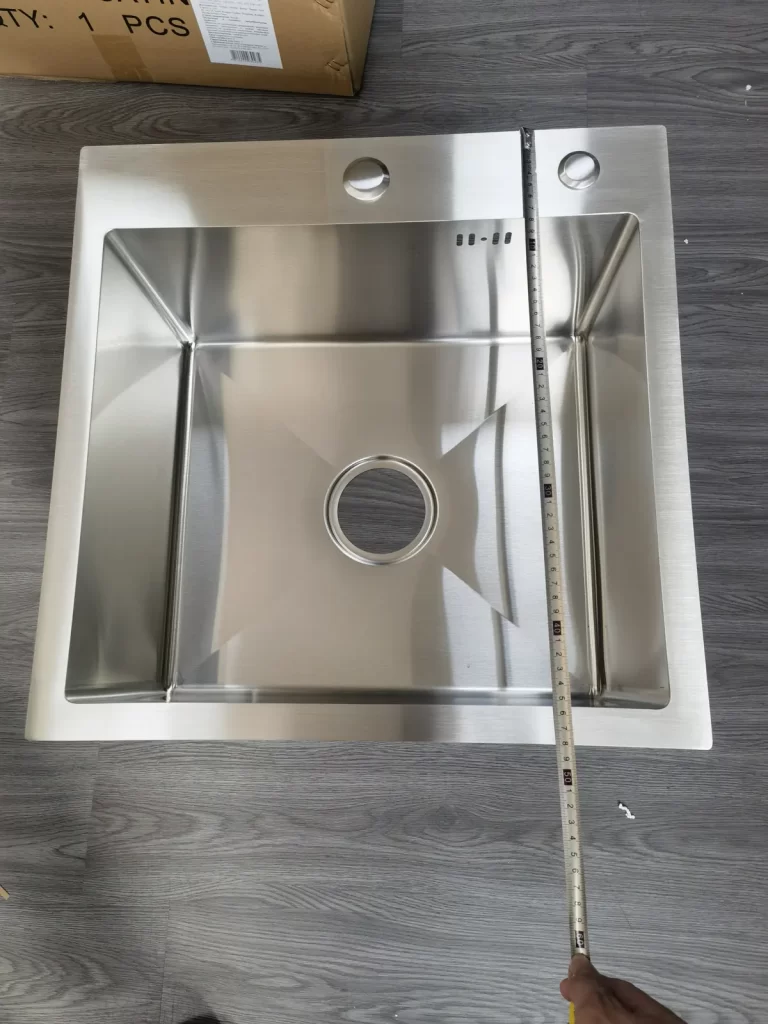


Water droplets under a stainless steel kitchen sink can come from condensation, a leaking drain connection, a supply-line problem, water entering around the faucet or countertop, or simple splash-over. The correct fix depends on where the moisture starts. Before tightening or replacing parts, dry the area and identify the source under controlled conditions.
This distinction also matters to importers, distributors, and project buyers. A complaint described only as “water under the sink” may relate to the sink, an accessory, the plumbing installation, cabinet ventilation, or local site conditions. Clear drawings, accessory lists, and inspection records make after-sales diagnosis faster.
First Identify Where the Water Droplets Appear
Start by separating three different conditions. Droplets on the inside of the bowl may be normal residual water or mineral spots after evaporation. Moisture on the underside of the bowl may be condensation when cold water cools the metal in warm, humid air. Water concentrated around the drain fitting, faucet hoses, supply valves, or cabinet joints is more likely to indicate leakage or splash migration.
Do not assume that every droplet is a sink defect. The location, timing, water temperature, and operating condition provide stronger evidence than appearance alone.
Common Causes of Water Under a Kitchen Sink
Condensation on the Underside
Condensation can form when very cold water lowers the temperature of the sink surface below the dew point of the surrounding air. It is usually spread across a wider area rather than concentrated at one joint. Humid rooms, limited cabinet airflow, and long cold-water use can make it more noticeable.
Drain Fitting or Overflow Leakage
Moisture that begins around the drain opening may come from a displaced seal, a loose connection, an incompatible fitting, or incorrect assembly. If the sink has an overflow, test that route separately because a problem may appear only when the water level reaches the overflow opening.
Faucet, Supply Hose, or Valve Leakage
A slow leak from a faucet connection or supply hose can travel along the hose and drip at a lower point, making the source difficult to see. Check connections while the faucet is off and again while hot and cold water are running. If a valve or pressurized line is leaking, close the relevant supply and use a qualified local plumber.
Countertop Seams and Splash-Over
Water around the rim, faucet base, or countertop cutout can enter the cabinet without passing through the drain. This is especially easy to misdiagnose after cleaning or heavy sink use. Dry the countertop and rim, then test these areas separately from the plumbing connections.
A Step-by-Step Check to Find the Source
- Remove stored items from the cabinet and dry the bowl underside, drain fitting, hoses, valves, countertop edge, and cabinet base.
- Place dry paper around each suspected connection so that the first wet location can be identified.
- Without running water, observe the supply hoses and valves. Existing moisture here points away from the drain.
- Run cold water directly into the drain without splashing the bowl rim. Check the drain fitting and P-trap connections.
- Fill and release a moderate amount of water to place a higher load on the drain assembly, then inspect again.
- Test the faucet base, countertop seam, overflow, dishwasher hose, or disposal connection separately where those components are present.
- If moisture appears broadly only after extended cold-water use, compare the pattern with room humidity and cabinet airflow before concluding that a joint is leaking.
Stop the test if water approaches electrical connections, damages the cabinet, or cannot be contained. Hidden or pressurized leaks require local professional inspection.
Water Spots Inside the Bowl Are a Different Issue
Marks left inside the bowl after droplets evaporate are usually a surface-maintenance question, not evidence of an underside leak. Rinse away residues, wipe the surface dry, and follow the care instructions approved for the specific finish. Avoid assuming that one cleaner or abrasive method is suitable for every stainless steel surface.
Buyer Checklist Before Ordering or Approving a Model
- Confirm the sink model, bowl dimensions, drain-opening location, and drain-opening size on the approved drawing.
- Confirm whether the strainer, drain fitting, overflow parts, clips, seals, and connection adapters are included.
- Check that accessory interfaces match the plumbing conventions and installation requirements of the target market.
- Review cabinet clearance for the P-trap, disposal unit, appliance hoses, valves, and service access.
- Define whether underside pads or coatings are included for the exact model without assuming that they eliminate condensation.
- Align the quotation, approved sample, drawing, packing list, installation sheet, and carton model label.
Drain-opening compatibility deserves separate review. The related guide to sink drain size selection can support that discussion, but the final dimensions must be confirmed for the selected model and market.
Quality Control and Installation Handover
Before shipment or project handover, inspect the drain opening, bowl underside, rim, welded or formed areas applicable to the model, and supplied accessories for visible damage or mismatch. A controlled water check can help identify leakage at assembled components, but the inspection method and acceptance criteria should be agreed for the specific order rather than presented as a universal factory test.
Keep photos of the approved sample, accessory set, packaging, and installed connections. When a complaint occurs, record exactly when the droplets appear, whether hot or cold water was used, which connections were active, and where moisture first became visible. This evidence helps separate product condition from accessory or installation issues and supports more consistent supplier quality review.
Часто задаваемые вопросы
Do water droplets under a stainless steel sink always mean a leak?
No. Broad moisture across the underside after prolonged cold-water use may be condensation. Water that begins at a drain, hose, valve, faucet base, or countertop joint is more consistent with a connection or installation issue. Dry and test each area separately.
Can an underside pad prevent all condensation?
No universal result should be assumed. Condensation depends on surface temperature, humidity, airflow, use conditions, and the exact sink construction. Confirm what is included with the model and manage cabinet conditions according to the project environment.
What evidence should a distributor request for a water-under-sink complaint?
Request the model, installation photos, accessory list, first wet location, test sequence, water temperature, timing, and images of the drain, hoses, faucet base, countertop seam, and cabinet. This information is more useful than a single photo of droplets.
Request a Model-Specific Review
For a sourcing or project inquiry, provide the target market, sink model, estimated quantity, approved drawing, drain and overflow requirements, accessory list, cabinet constraints, finish, and packaging needs. These details allow the applicable interfaces and inspection points to be reviewed for the exact model without changing the existing page URL or making a universal compatibility claim.
Нужно укомплектовать серию кухонь? Смотрите мойки с одной чашей оптом — от компактных до моделей с крылом.