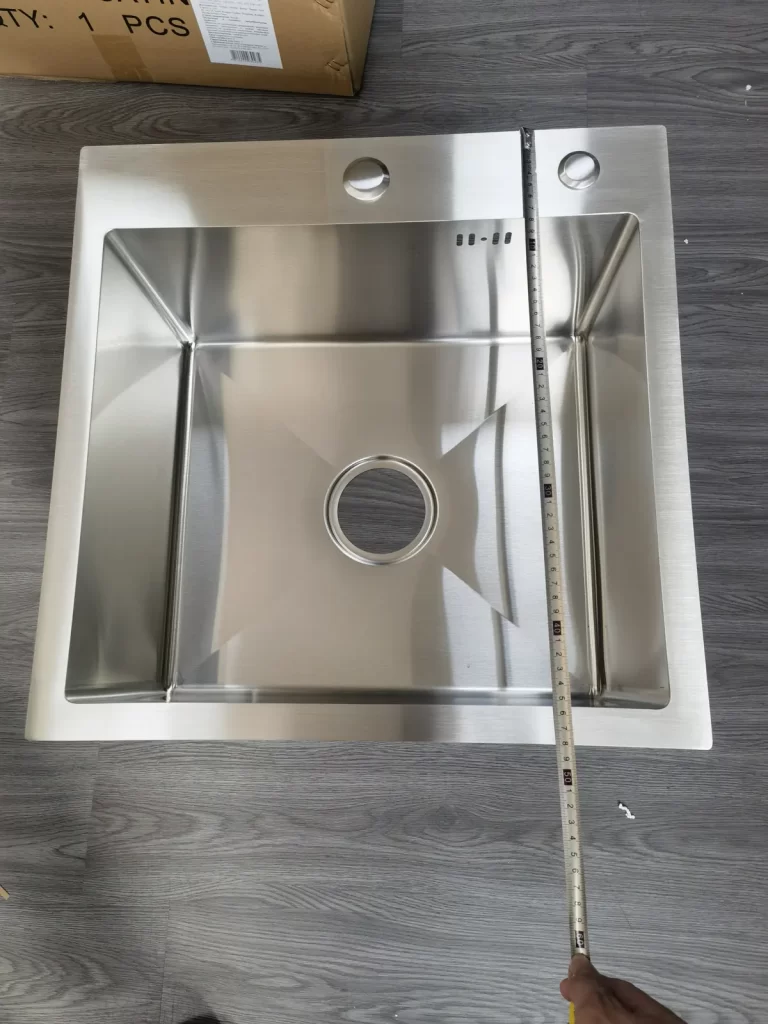


The choice of edge in a stainless steel kitchen sink is more than just a detail; it’s a crucial element that defines the sink’s functionality, aesthetic, and compatibility with kitchen design. Today’s market offers a variety of edging options, each tailored to different installation preferences and design requirements. This article delves into the nuances of stainless steel sink edging, analyzing the advantages and limitations of original edge, layon edge (1 side up, 3 sides down), layon edge (4 sides down), and inset edge. By understanding these variations, kitchen sink manufacturers in China and global distributors can offer products that not only resonate with quality but also align with the diverse needs of modern kitchens.
Whether for a bustling family kitchen or an elegant outdoor cooking area, each edging style offers unique benefits to enhance the kitchen experience. As we explore these edging options, we invite you to consider how they can integrate into your range of stainless steel sinks, enhancing both functionality and design for end-users.
Kitchen Sink Edge Mastery in Stainless Steel Craft
Original Edge: The Standard in Simplicity
The original edge represents the traditional approach to stainless steel sink edging. It’s straightforward, unpretentious, and designed to fit standard cutouts in most kitchen countertops. Its ease of installation and classic appearance make it a safe choice for many kitchen styles. However, its simplicity might not meet the demand for more contemporary or custom-designed kitchens where a more seamless integration is desired.
Layon Edge: Elevated Aesthetics Meets Practicality
Layon edges are the answer to a seamless countertop transition. With one side up and three sides down, the lay-on edge provides a slight overhang, offering a clean line and easy cleanup of spills. This design minimizes the accumulation of crumbs and debris around the sink’s perimeter, promoting better hygiene and maintenance.
Alternatively, the layer edge with all four sides down extends this benefit around the entire sink, giving a more finished look and an even smoother interface with the countertop. While offering distinct aesthetic benefits, layon edges require precision in manufacturing and installation, as the exactness of the fit is paramount to achieving the desired sleek look.
Inset Edge: For the Discerning Designer
The inset edge style is for those who seek a fully integrated look. It sits flush with the countertop, providing a smooth and continuous surface from edge to edge. This modern approach is favored in well-made kitchen designs and can add a touch of sophistication to any kitchen. However, it demands meticulous installation and exact countertop measurements, which can increase the complexity and cost of the overall kitchen design.
Professional’s Guide to Kitchen Sink Edge Selection
Evaluating Kitchen Needs
When selecting the appropriate edge for a stainless steel kitchen sink, consider the kitchen’s layout, the homeowner’s style preferences, and the sink’s intended use. For high-traffic kitchens, an edge that promotes easy cleaning and hygiene may be prioritized, while in more design-focused spaces, the aesthetic of the edge will play a larger role.
Industry Trends and Customer Preferences
Staying informed about the latest trends in kitchen design is essential for kitchen sink manufacturers and distributors. By understanding what homeowners and designers are looking for, you can tailor your product offerings to meet these preferences, whether it’s the minimalistic elegance of an inset edge or the classic functionality of an original edge.
The Impact of Edge Design on Functionality
Beyond aesthetics, the practical implications of sink edges are significant. Consider how each edge type will interact with kitchen appliances, the ease of countertop cleaning, and the potential for water spillage. For example, layon edges might better contain water, while inset edges offer a completely flush surface for wiping spills directly into the basin.
Integrating Edges into Kitchen Design
Balancing Form and Function
The best stainless steel sink edge balances form and function, integrating seamlessly into the kitchen’s design while providing practical benefits. It should enhance the sink’s usability without compromising on style, and it must be executed with precision to ensure a perfect fit and finish.
Material Considerations and Durability
Material quality is as important as design in edge selection. A well-crafted edge on a high-quality stainless steel sink will maintain its integrity over time, resisting warping and damage that could compromise the sink’s fit and finish.
Installation Expertise
Proper installation is critical, especially for more complex edge designs like layon and inset edges. Professionals must be skilled in ensuring that the sink and countertop align perfectly to prevent issues such as water damage and debris accumulation.
In conclusion, the edge design of a stainless steel kitchen sink is a defining feature