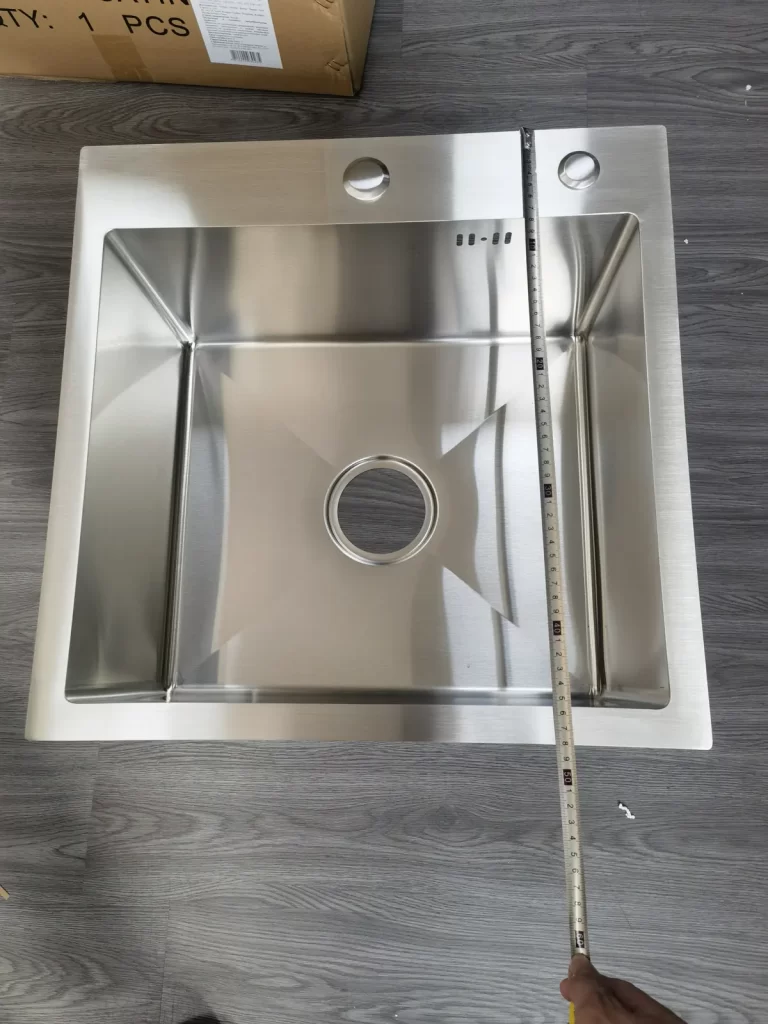


A dripping kitchen sink faucet is not automatically a sink defect, and it should not be treated as a single universal repair problem. Water may come from the spout, handle, faucet base, supply hoses, shutoff valves, drain assembly, countertop edge or condensation below the bowl. For importers, distributors and private-label buyers, identifying the first wet point is essential before approving replacement parts, assigning responsibility or opening an after-sales claim.
This guide explains how to classify the symptom, what technical boundaries matter and which sink-and-faucet compatibility details should be confirmed before ordering. It does not replace the faucet supplier’s model-specific instructions or qualified plumbing work.
First Identify Where the Faucet Is Leaking
Dripping From the Spout When Closed
A continuing drip from the outlet after the handle is closed usually points to the faucet’s internal water-control assembly rather than the stainless steel sink. Depending on the design, the relevant components may include a cartridge, ceramic-disc assembly, compression washer, valve seat or seal. Similar-looking faucets can use different parts, so the brand, model and valve type should be confirmed before a component is ordered.
Leak Around the Handle or Faucet Base
Moisture around a handle or faucet base may involve an internal seal, a loose mounting condition, splash-over or water travelling across the deck. Dry the area and observe where moisture first appears while the faucet is operated. Do not assume that water visible at the base proves that the sink’s faucet hole or deck is defective.
Leak at Supply Hoses or Shutoff Valves
Water below the faucet may originate at a hose, adapter, threaded connection or shutoff valve. These parts may be supplied by different parties and may follow different market standards. Record the exact first wet point, connection type and installed components before tightening or replacing anything. Excess force or an unsuitable sealing method can damage a connection instead of correcting it.
Water Under the Sink That Is Not From the Faucet
Drain leakage, overflow connections, splash-over and condensation versus a localized leak can all place water inside the cabinet. Test one source at a time. If water appears only when the bowl drains, inspect the drain path separately from the faucet and supply system.
A Controlled Check Before Parts Are Replaced
- Clear the cabinet and dry the faucet, sink deck and visible connections.
- Observe the spout, handles, base, hoses and shutoff valves before running water.
- Test hot and cold operation separately and note where moisture first appears.
- Check whether the symptom occurs with the faucet closed, open or only while water drains.
- Confirm the faucet brand, model and valve mechanism before selecting a part.
- If inspection requires disassembly, isolate the water supply and verify that flow has stopped.
- Follow the faucet supplier’s instructions for accessible components, compatible parts and tightening methods.
- After reassembly, restore water gradually and retest every observed connection.
Stop the check if the shutoff valve does not isolate the supply, the leak is concealed or pressurized, cabinet damage is developing, or water is near electrical equipment. Those conditions require qualified assessment rather than further trial-and-error work.
Why Faucet Type and Model Matter
Cartridge and Ceramic-Disc Faucets
Cartridge dimensions, locating features, seals and operating direction can be model-specific. Ceramic-disc assemblies also vary. A visually similar replacement may not fit or seal correctly, so buyers should use the approved parts list or faucet supplier’s model reference rather than selecting parts by appearance alone.
Compression and Other Valve Designs
Some faucet designs use replaceable washers or seats; others do not. This is why “replace the washer” is not a universal answer to a dripping kitchen faucet. The repair path depends on the mechanism, the damaged surface and the availability of compatible service parts.
Cleaning, Tightening and Replacement Boundaries
Mineral deposits may restrict an aerator or affect an accessible component, but cleaning products must be compatible with the faucet material and finish. Acidic household treatments should not be presented as suitable for every plated or coated surface. Follow the faucet supplier’s care instructions.
Likewise, connection type determines the correct seal, washer, thread treatment and tightening method. A loose joint may need attention, but indiscriminate tightening can deform seals, damage threads or stress a hose. Part replacement should follow confirmed model identification and a documented leak location.
What Importers and Distributors Should Confirm Before Ordering
A sink and faucet can each meet their own drawing while still creating an installation problem when the interface has not been checked. Before approving a model or private-label combination, confirm the following:
- Target market and applicable installation requirements.
- Faucet-hole count, diameter and position on the sink or countertop.
- Sink deck or countertop thickness, reinforcement and mounting clearance.
- Under-deck access for mounting hardware and future service.
- Supply-hose length, connector type and shutoff-valve interface.
- Included mounting hardware, seals, hoses and adapters.
- Replacement-part identification and availability from the faucet supplier.
- Agreement among the quotation, approved drawing, sample, model label and packing list.
The kitchen sink sample approval checklist can support this review. Buyers comparing stainless steel kitchen sink options should confirm the interface for the exact sink and faucet combination rather than relying on a category-level assumption.
Quality Control and After-Sales Evidence
Evidence to Collect
A useful claim record should identify the exact sink and faucet models, first wet point, operating condition, hot/cold test result, installation date, supplied components and any parts already replaced. Clear photos or video should show the sequence that reproduces the symptom, not only the water found after the event.
Separate Product, Accessory and Installation Findings
Classify the sink body, faucet, supply hoses, shutoff valves, mounting hardware and installation work separately. This prevents a faucet-component or plumbing-interface issue from being recorded automatically as a stainless steel sink defect. It also gives the relevant supplier enough evidence to review the correct component.
FAQ
Why does a kitchen faucet keep dripping after it is turned off?
A spout drip can be associated with a worn or contaminated valve component, cartridge, ceramic-disc assembly, washer or seal, depending on the faucet design. Confirm the leak location and exact model before selecting a replacement part; an unseen faucet cannot be diagnosed from the symptom alone.
Does every dripping faucet need a new cartridge?
No. Some faucets use cartridges, while other designs use ceramic discs, compression washers or different valve assemblies. Leakage can also come from a handle seal, supply hose, shutoff valve or mounting area. Identify the first wet point and faucet model before replacing components.
What should an importer confirm before approving a sink and faucet combination?
Confirm the faucet-hole count, diameter and position; sink or countertop thickness; mounting and service clearance; hose length; connection standards; included hardware and adapters; and target-market installation requirements. The approved drawing, sample, quotation, packing list and model label should describe the same configuration.
Request a Model-Specific Compatibility Review
For an importer, distributor or brand program, prepare the target market, sink and faucet models, hole configuration, deck thickness, connector requirements, estimated quantity and installation drawing. Then request a model-specific compatibility review. Compatibility and supply details must be confirmed for the selected models and order requirements.