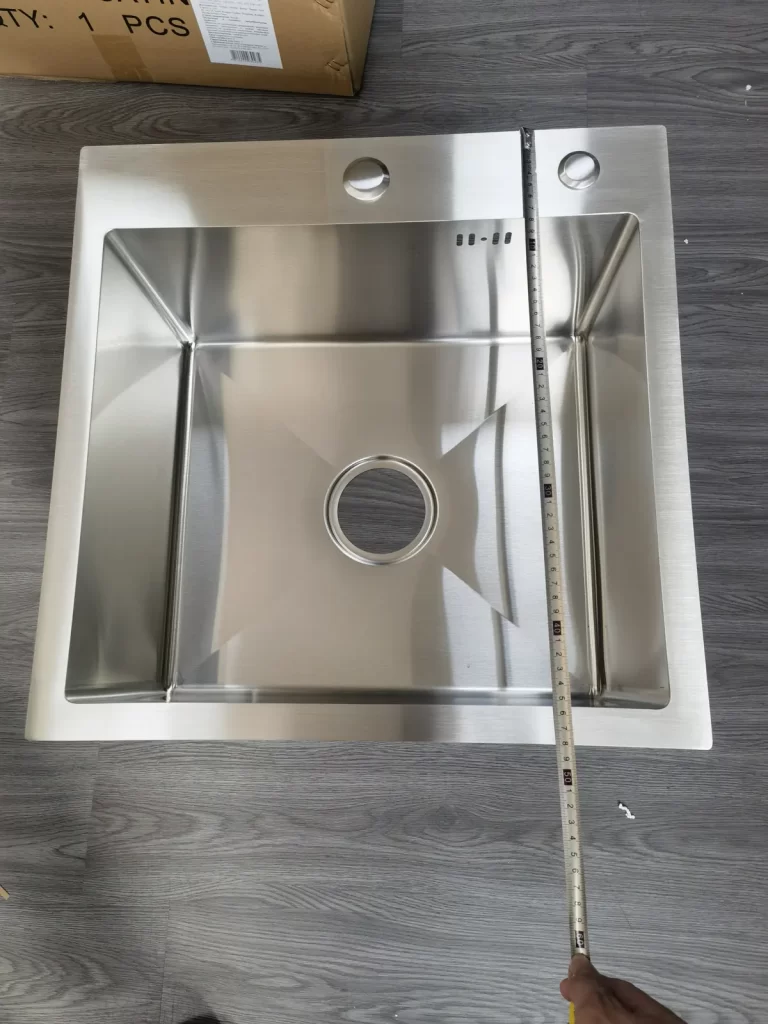


Choosing 201 vs 304 is a market-positioning, cost-control and complaint-risk decision — not just a material-grade question. Match 201 to price-sensitive or regional channels and 304 to markets with stricter corrosion or food-safety expectations, then confirm the grade on the mill test certificate before order. This guide covers what importers should compare.
Buyers make the mistake of asking only which material is better. That sounds reasonable, but it is the wrong way to think. In B2B sourcing, the better material is not the one with the better reputation on paper. The better material is the one that fits the target market, the selling price, the customer expectation, and the buyer’s repeat-order plan.
Al elegir fregaderos de acero inoxidable, los importadores suelen comparar requisitos distintos: material, espesor, acabado y aplicación. Más adelante se enfrentan a reclamaciones sobre resistencia a la corrosión, estabilidad del acabado o posicionamiento del producto. Otros compradores llevan todo hacia especificaciones más altas sin comprobar si sus clientes están dispuestos a pagarlas. En ese caso el producto puede ser bueno, pero la respuesta del mercado puede seguir siendo débil porque el nivel de precio no es el adecuado.
Por eso el 201 frente al 304 nunca debería discutirse de forma aislada. Los compradores deberían comparar el material junto con la estructura, el espesor, el acabado, el embalaje y el canal de venta objetivo. Un fregadero no es solo un producto metálico. Es un artículo de venta minorista, un artículo mayorista y un producto que debe superar el transporte, el almacenamiento, la exposición y el uso final.
Qué deben comparar los importadores al elegir un fregadero de cocina 201 o 304
The first point is material positioning. In general, 201 stainless steel can be suitable for projects that need stronger price control and a more competitive entry level. For some markets and product lines, this can make sense, especially when the buyer is targeting cost-sensitive channels. But lower material cost does not automatically mean better business. If the final customer expects stronger corrosion resistance or a more quality image, a lower-grade choice can create problems later.
El acero inoxidable 304 suele ser la opción más segura para compradores que buscan una imagen de mercado más alta, mayor resistencia a la corrosión y más confianza a largo plazo en la línea de producto. A menudo resulta más adecuado para marcas, distribuidores premium y compradores que quieren reducir el riesgo de reclamaciones con el tiempo. Pero el 304 tampoco es una respuesta mágica. Si el canal objetivo no puede sostener el precio de venta final, incluso una opción de material más fuerte puede resultar comercialmente débil.
The second point is production structure. Buyers should not discuss 201 vs 304 without also asking whether the sink is handmade or pressed. A pressed sink usually fits standard retail programs, more price-sensitive channels, and higher-volume SKUs. A handmade sink often fits collections, sharper design expectations, deeper bowls, and stronger private-label positioning. The material choice and the production method must support each other. A premium-looking handmade sink with the wrong material logic can confuse the market. A price-sensitive retail line with overbuilt specifications can also lose competitiveness.
The third point is thickness. Buyers ask for a thicker sink because thicker sounds better. But in real sourcing, thickness only matters when judged together with the structure, bowl size, reinforcement design, finish process, and packaging method. A thicker sink may improve feel and perceived value, but thickness alone does not guarantee better commercial performance. If packaging is weak, if the finish is unstable, or if the product does not match the buyer’s channel, the thicker steel will not solve the real problem.
El cuarto punto es el coste total. Demasiados compradores comparan únicamente la cotización ex-works. Eso no es suficiente. Un fregadero debe valorarse por su coste total de negocio, incluyendo la estabilidad de producción, la protección del embalaje, el riesgo de daños en el transporte, el estado para la reventa, la tasa de devoluciones y la consistencia en los pedidos recurrentes. Un fregadero de precio más bajo puede resultar más caro después si genera reclamaciones, reposiciones o un rendimiento débil en reventa. Un fregadero con un coste algo mayor puede resultar más rentable si es más fácil de vender y más fácil de volver a pedir.
The fifth point is market fit. Importers should always ask: who is the final customer? Is the sink being sold to mass retail, distributors, project channels, brand programs, or private-label buyers? Is the market more sensitive to price, finish, bowl depth, or image? Once this is clear, the material decision becomes more practical and less emotional.
Por qué la decisión correcta entre un fregadero de cocina 201 y 304 depende del modelo de negocio, no solo del grado del material
El valor real de elegir entre 201 y 304 no consiste en ganar una discusión técnica. Consiste en construir un programa de fregaderos que funcione comercialmente.
If the buyer needs a cost-sensitive line with strong price competitiveness, a properly positioned 201 sink may be the better fit. If the buyer needs stronger quality perception, better corrosion resistance, and a more image, 304 may be the more suitable choice. If the product range includes handmade sinks for private-label or retail, the structure and finish should also support that higher positioning. If the line is focused on standardized retail volume, then cost efficiency and repeat-order stability may matter more than pushing the highest specification.
Por esa razón, los importadores deberían dejar de preguntar solo qué acero es mejor. La mejor pregunta es esta: ¿qué especificación da lugar a un fregadero que el mercado pueda aceptar, que el canal pueda sostener y que el negocio pueda volver a pedir con confianza? Así es como la elección de material se convierte en una verdadera decisión de abastecimiento y no en una simple comparación de catálogo.
Un proveedor fiable debería poder guiar al comprador con claridad a lo largo de este proceso. El objetivo no es simplemente vender un pedido. El objetivo es ayudar al comprador a elegir un material y una estructura de producto capaces de resistir la competencia de precios, respaldar el mercado previsto y convertirse en un negocio repetible.
Enlaces de abastecimiento relacionados
Utilice estos enlaces para pasar de la guía a la comparación de producto y a la conversación de abastecimiento.
- modelos de fregadero de cocina de acero inoxidable 201
- 2120 fregadero de cocina compacto de acero inoxidable 201
- Solicite los detalles del producto
Solicite una cotización OEM / al por mayor
Based in Foshan, Guangdong, China, we support qualified importers, distributors and B2B buyers with pressed fregadero de cocina de acero inoxidable sourcing.
El MOQ y el plazo de entrega se confirman según el modelo y los requisitos de la cotización.
Send Your Target Size and Quantity
We supply both 201 and 304 bodies. Share your destination-market preference and any local compliance needs so we can match the right material and return a quotation.