

In modern kitchens, stainless steel sinks are a popular choice due to their excellent durability and corrosion resistance. This article provides a detailed analysis of different types of stainless steel sinks, focusing on material thickness, manufacturing processes, and surface treatments, to help consumers make informed decisions.
Handmade Sink Bowl: The Choice
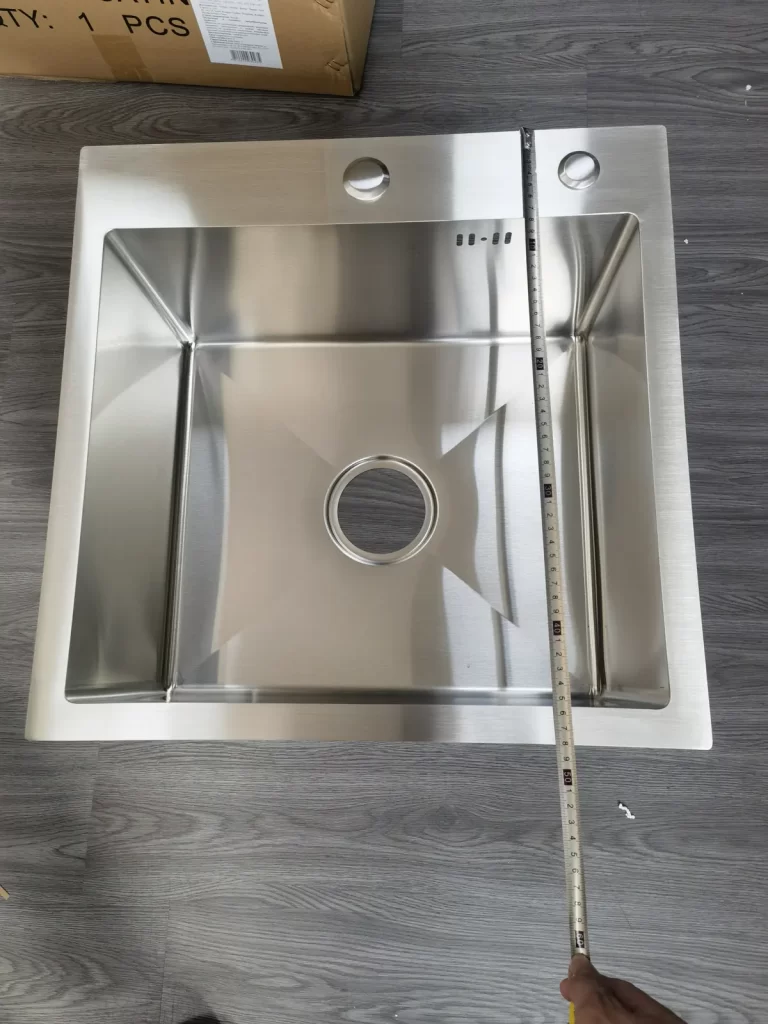
Handmade stainless steel sinks are highly favored by consumers for their exquisite craftsmanship and high-quality materials. Compared to machine-made sinks, handmade sinks typically use thicker stainless steel, which not only increases durability but also enhances corrosion resistance.
Material Thickness: Handmade sinks usually use 1.5 mm (16-gauge) or 1.2 mm (18-gauge) stainless steel, which is thicker than the commonly used 0.9 mm (20-gauge) stainless steel, offering strong durability and impact resistance.
Manufacturing Process: Handmade sinks undergo multiple grinding processes to ensure every corner and edge is flawless, resulting in a longer lifespan.
Surface Treatments: Common surface treatments for handmade sinks include brushed finish, nano black, rose gold, gold color, and honeycomb patterns. When color treatments are applied, such as nano black and rose gold, they provide scratch and fingerprint resistance. The bottom spraying is for moisture protection and noise reduction, further enhancing the user experience.
China Kitchen Sink: Quality and Affordability
Chinese-made stainless steel sinks have gained significant recognition in the international market for their high cost-performance ratio and stable quality, gradually becoming popular among consumers.
Material Selection: Many Chinese-made sinks use 201 or 304 stainless steel, known for their good corrosion and heat resistance, making them suitable for long-term use.
Manufacturing Process: Through precise manual manufacturing and strict quality control systems, Chinese-made sinks excel in consistency and stability.
Surface Treatments: Chinese-made sinks also focus on surface treatments, including brushed finishes, natural stainless steel, and plating treatments. Particularly for color treatments, advanced techniques are used to enhance the durability and aesthetics of the sinks.
Honeycomb Sink Review: Analyzing Honeycomb Design Stainless Steel Sinks
Honeycomb design stainless steel sinks are becoming increasingly popular due to their unique surface patterns and strong performance. The honeycomb structure not only enhances the sink’s impact resistance but also reduces noise and vibration.
Material Thickness: Honeycomb design handmade sinks typically use thicker stainless steel, such as 1.5 mm (16-gauge) or 1.2 mm (18-gauge), to enhance strength and durability.
Manufacturing Process: The honeycomb design is created through machine embossing to form the distinctive honeycomb pattern while maintaining the precise craftsmanship of handmade production.
Surface Treatments: Honeycomb surface treatments offer two options: plating treatments for color finishes and natural stainless steel honeycomb surfaces. These treatments not only improve the sink’s aesthetics but also enhance corrosion resistance.
Comprehensive Comparison and Selection Recommendations
By analyzing handmade sinks, Chinese-made sinks, and honeycomb design sinks, we can see that each type of sink has its unique advantages in terms of durability and corrosion resistance. Consumers can make informed choices based on their needs and budget.
- Budget-Conscious with High Cost-Performance: Chinese-made stainless steel sinks are an ideal choice, providing good quality and value for everyday use.
- Seeking High Quality and Unique Design: Handmade stainless steel sinks are perfect for consumers who value exquisite craftsmanship and high-quality materials.
- Focusing on Impact Resistance and Noise Reduction: Honeycomb design stainless steel sinks offer excellent performance in impact resistance and noise reduction, suitable for kitchens with frequent use and noise sensitivity.
Conclusion
Durability and corrosion resistance are crucial factors for consumers when choosing stainless steel sinks. Through a detailed analysis of different types, we can see the distinct advantages of handmade sinks, Chinese-made sinks, and honeycomb design sinks. We hope this analysis helps you better understand the market and choose the best sink for your kitchen needs. A Foshan-based B2B supplier remains committed to producing high-quality stainless steel sinks to meet the diverse needs of consumers. Thank you for your reading and support.

Explore our full range of stainless steel kitchen sinks — including pressed and handmade models for importers and distributors.
Request an OEM / Wholesale Quotation
Based in Foshan, Guangdong, China, we support qualified importers, distributors and B2B buyers with pressed stainless steel kitchen sink sourcing.
MOQ and lead time are confirmed according to model and quotation requirements.